
About this program
Start Date
Ongoing Intake
Campus
Rainy Lake
Kenora
Program Length
Length varies based on course-load
Part-time
Evenings and weekends
Credential
Degree
About the program
This diverse, self-paced degree program is designed to acquaint students with a broad range of courses in the social sciences and humanities. Students can pursue a general degree or specialize in Indigenous learning. Classes are held on weekends.
Course offerings vary each academic year and reflect the needs of the student cohort. Typical selections include a range of humanities, social science, and Indigenous learning courses at the first, second, and third-year levels. Courses are either 0.5 FCE (Full-time Course Equivalent) or 1.0 FCE. Completion of either the General or Indigenous Learning degree requires 15 FCEs. Conditions and restrictions for each degree stream are published in the Lakehead University Academic Calendar.
Upcoming courses
This part-time program offers one course at a time. Classes are held evenings and weekends.
INDI 3012 SSG: Working with Indigenous Knowledges
An introductory course where definitions and characteristics of Indigenous knowledge systems are explored. Students will also engage with key considerations to promote respectful and responsible engagement with Indigenous knowledges, including cultural appropriation, representation, intellectual property rights, cultural protocols and working with Elders.
Schedule: May 8-24. Friday evenings from 6-9 pm and Saturdays and Sundays from 9 am – 5 pm.
INDI 1310 SSG: Methods/Approaches Applied to Indigenous Learning.
Interdisciplinary in approach, this course draws from areas such as anthropology, ethnography, history and linguistics; of particular importance is the use of oral tradition, art and/or material culture as the means of acquiring a comprehensive method of understanding the process of Indigenous Learning.
Schedule: June 5-28. Friday evenings from 6-9 pm and Saturdays and Sundays from 9 am – 5 pm.
INDI 2011 FSG: Gender and Indigenous Communities.
This course involves the study of Indigenous concepts and expressions of gender and how they have been impacted by colonialism. Themes include, Indigenous masculinities, two-spirit and gender-queer identities, and Indigenous feminisms.
Schedule: September 11-27. Friday evenings from 6-9 pm and Saturdays and Sundays from 9 am – 5 pm.
HIST 2811 FSG: Fascism Past and Present
This course explores the history of fascism since the nineteenth century, focusing in particular on its links to racial capitalism, settler colonialism, and hyper masculinity, and on its resurgence in recent decades.
Schedule: October 23-25. November 6-22. December 4-6. Friday evenings from 6-9 pm and Saturdays and Sundays from 9 am – 5 pm.
PHIL 2413 FSG: A Defense against the Dark Arts
A study of reasoning and argument in real-life contexts such as editorials, magazine articles, political speeches, and videos. The purpose of the course is to foster the ability to think critically, detect flaws in fallacious arguments, and defend against the dark arts of sophistry and rhetoric employed by politicians, corporations, and fake news sites in an attempt to manipulate individuals and the public.
Schedule: January 8-10. February 5-7. Friday evenings from 6-9 pm and Saturdays and Sundays from 9 am – 5 pm.
SOCI 2112 FSG: Disability in the North
This course examines the social, political, and economic realities of living with disability in northern, rural, and remote communities. We explore how isolation, infrastructure gaps, colonialism, climate, and unequal access shape everyday life.
Schedule: January 22-24 and 29-31. Friday evenings from 6-9 pm and Saturdays and Sundays from 9 am – 5 pm.
INDI 3012 WSG: Indigenous Film
This course explores diverse themes and aesthetics within the contemporary Indigenous film production across Turtle Island, Abiayala–the Americas, and Oceania. Full-length movies, shorts, documentaries, as well as animation and video art will be examined. In addition to contextualizing the piece, we will reflect on the specifics of Indigenous filmmaking using storytelling, humour, and land ethics, as well as on representation, resources, and technology within the broader field of Film Studies. Some films will be in English, others non-verbal, and some will be in Spanish and Native languages with English subtitles.
Schedule: February 26-28. March 12-14. Friday evenings from 6-9 pm and Saturdays and Sundays from 9 am – 5 pm.
INDI 4014 WSG: Indigenous Peoples and Extractivism
This course examines Indigenous resistance to extractivist industries and reclaiming land ethics, sovereignty, and sustainability through Indigenous knowledge and global case studies. Based on Indigenous science, the course reflects on definitions of “natural resource,” “energy,” “development,” and “sustainability,” and explores topics such as the doctrine of discovery, settler colonialism, Indigenous land ethics, and restoration.
Schedule: April 2-18. Friday evenings from 6-9 pm and Saturdays and Sundays from 9 am – 5 pm.
Admission
Ontario Secondary School Diploma or equivalent, six Grade 12 U/M level courses and a minimum average of 70% or mature student status.
Are you missing program prerequisites?
Are you missing prerequisites for a program? We can help! SGEI offers common prerequisite courses. All you have to do is apply, and we will be in touch with you.
Fees
| Year | 1.0 FCE Tuition | 1.0 FCE Total | 0.5 FCE Tuition | 0.5 FCE Total |
|---|---|---|---|---|
| 1 | $1,196.90 | $1,331.31 | $598.45 | $665.66 |
| 2 | $1,191.17 | $1,325.58 | $595.59 | $662.79 |
| 3 | $1,183.06 | $1,317.47 | $591.53 | $658.74 |
| 4 | $1,079.66 | $1,214.07 | $539.83 | $607.03 |
Funding opportunities
If you need assistance funding your education, visit our Financial Aid page to learn more about bursaries, grants, OSAP and more.
Meet your coordinator(s)
Our dedicated program coordinators are here to help you succeed, both in and out of the classroom.
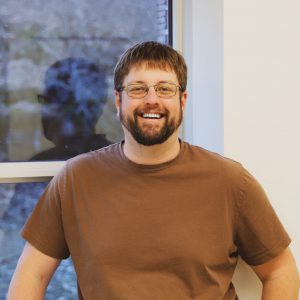
Anthony Leek
Kenora Campus (807) 468-3096 x 3207 anthonyl@7generations.org
Have questions? Connect with a coordinator!
Have questions about this program? Contact a coordinator directly or submit your question(s) below and a program coordinator will reach out to you.
Career options
Bachelor of Arts graduates typically experience improved communications, critical thinking and research skills, understanding, and creativity. University graduates typically enjoy increased pay salaries in their careers and often go on to pursue further education in teaching, communications, business, and other disciplines.
Where you might work
- Communications
- Project Management
- Business
- Social Work